sicher-bunkern.de

An initiative by LIFETIME Technologies

FAME Transition in Inland Shipping 2026 to 2030

What changes inside your tank with RED III.

A knowledge initiative on maintaining your propulsion system as bio shares rise. Factual overview, industry-grade evidence and practical recommendations for inland shipping.

Regulation

What does RED III mean for inland shipping?

The EU's Renewable Energy Directive III (RED III) requires Member States to significantly raise the share of renewable energy in the transport sector by 2030. In practice, this means for inland shipping: the FAME bio share in bunker gas oil is rising – gradually, varying by region, but clearly toward higher blends.

Important context: FAME blends are within specification. The EN 590 standard is met, engine manufacturers approved B7 long ago, B10 and B20 are following. The fuel itself remains reliable. What changes is the maintenance inside the tank.

Three maintenance topics shift as the bio share rises. We explain them factually on this page, place the background in context and show what to look out for in practice. Anyone looking for the deeper detail can request the comprehensive whitepaper as a PDF.
Three Maintenance Topics

What shifts as the bio share rises

The bunker diesel remains within specification. What shifts are three maintenance topics inside the tank – each operator should know and prepare for them.

Wash effect

FAME acts as a solvent and dissolves legacy deposits from tank and pipework. These enter the fuel circuit and end up at the filter. Known as the "wash effect" when switching to higher bio shares, it leads to more frequent, unplanned filter changes.

Diesel bug

FAME absorbs more water than fossil diesel. A water phase forms at the tank bottom, in which bacteria, yeasts and fungi build a biofilm. It clogs filters and can attack pipework. Risk grows with bio share and lay-up periods.

Oxidation

FAME ages faster than fossil diesel. During longer lay-ups and seasonal operation, acids, varnish and lacquer residues form, clogging filters and gumming up injectors. Measurable within months.

Whitepaper

The FAME transition in detail

19-page PDF with the full breakdown – regulatory, technical and economic. Aimed at shipping companies, inspectors and owner-operators who want to go deeper.

  • Regulatory background: RED III and national implementations
  • Three maintenance topics inside the tank: wash effect, diesel bug, oxidation
  • Industry test procedures: CEC, ASTM, Modified Rancimat, FBT
  • Practical recommendations and dosing logic
  • Economic example for a vessel with 200,000 L annual consumption

Free of charge after a brief confirmation of your email address.

Request whitepaper

By submitting you agree that we send you the whitepaper by email. You can unsubscribe at any time. Privacy notice

Care Approaches

What helps during the FAME transition

Modern care concepts intervene directly at the fuel. They address the three maintenance topics across six targeted functional levels whose effect in the fuel is measurable by internationally recognised industry procedures.

Improving filterability

Slows filter clogging despite the wash effect.

Procedure: FBT (Filter Blocking Tendency)

Water separation

Cleanly separates water from the fuel and removes the breeding ground for the diesel bug.

Procedure: ASTM D1094

Oxidation stability

Keeps the fuel stable longer during lay-ups, delays acids and gum formation.

Procedure: Modified Rancimat

Corrosion protection

Protects tank bottom, pipework and pump components against water corrosion.

Procedure: ASTM D665A (NACE rating)

Injector cleanliness

Keeps injectors free of deposits and clears existing fouling.

Procedure: CEC F-23-01, CEC F-98-08

Anti-foam

Reduces fuel foaming during bunkering and shortens the process.

Procedure: Standardised bench measurement

Field Experience

15 years in inland shipping

Practical fuel care is not a laboratory exercise. It works only when actives, dosing and bunker reality fit together.

The care concept behind this initiative has been in use for over 15 years in European inland shipping – on the Main, Rhine, Danube and in the ARA ports. The V2 generation is the consistent evolution for the FAME transition under RED III.

Made in Germany. Proprietary formulation, proprietary production. Not an experiment, but proven care in field operation.

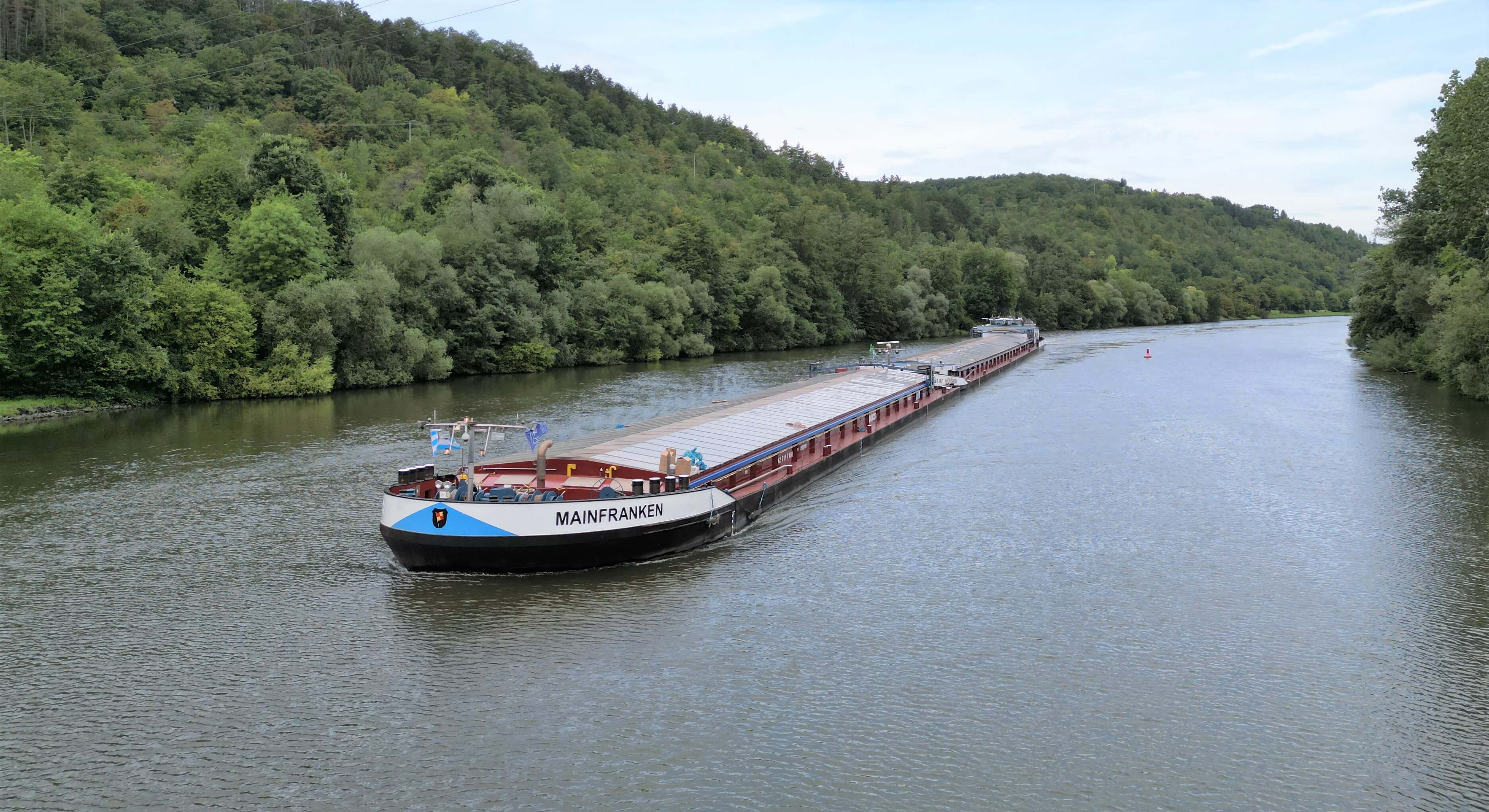
MAINFRANKEN inland vessel on the river Main – practical anchor of 15 years of industry experience

About the Initiative

Who is behind sicher-bunkern.de?

sicher-bunkern.de is an initiative by LIFETIME Technologies – a manufacturer of premium fuel additives with over 30 years of experience in engine and fuel care.

We want to support the industry through the FAME transition in a factual manner: with sound technical material, transparent industry test procedures, and an honest assessment of what is changing – and what is not.

Ready to take your fleet safely through the FAME transition?

Over 30 years of experience with premium fuel additives. 15 years in inland shipping.

Frequently asked questions

What does RED III mean for inland shipping in practice?

The Renewable Energy Directive III obliges Member States to raise the renewable share in transport to 29 % (or 14.5 % greenhouse gas reduction) by 2030. For inland shipping, this means: the FAME share in bunker gas oil rises gradually. B7 is standard today, B10 and B20 follow depending on country.

What is the diesel bug and how does it occur?

The diesel bug is a microbial infestation in the fuel tank. FAME absorbs more water than fossil diesel. At the tank bottom a water phase forms in which bacteria, yeasts and fungi build a viscous biofilm. It clogs filters and can attack pipework. The risk grows with bio share and lay-up periods.

What helps against the diesel bug?

The effective approach is water separation in the fuel. By cleanly separating water from diesel, microorganisms at the tank bottom lose their breeding ground. Modern diesel additives can do this during bunkering. Biocides are not required for this – and where a heavy infestation is already in place, an additive alone is not enough; a targeted tank sanitation is then needed.

Which test procedures verify diesel care actives?

Internationally recognised industry standards apply to fuel-related functional levels. They are not FAME-specific, but become particularly relevant during the FAME transition because the maintenance topics intensify: CEC F-23-01 and F-98-08 for injector cleanliness, FBT for filterability, Modified Rancimat for oxidation stability, ASTM D665A on the NACE rating for corrosion protection, ASTM D1094 for water separation. Detailed values for the Longlife DIESEL Green V2 care concept can be found on our test-bench page.

How often should a diesel additive be used?

With every bunker operation in the long-term protection dosage (Keep Clean). If deposits are already present, run an initial one-time deep-cleaning phase over several tank fills using the higher cleaning dosage (Clean Up), then switch to Keep Clean. Specific mixing ratios are in the whitepaper and technical data sheet.

Does an additive affect SCR/AdBlue or exhaust aftertreatment?

No. Modern diesel additives are added in low doses exclusively to the fuel. The EN 590 fuel specification is preserved. SCR/AdBlue systems and exhaust aftertreatment remain unaffected.

What about lubricity at B20 and above?

Lubricity at higher FAME shares is primarily addressed via the bunker specification. LIFETIME is preparing a dedicated supplementary product (market launch August). The existing care concept fully addresses the other maintenance topics of the FAME transition.